🍽️🫙 One Swap at a Time Series #2: Kitchen Edition — Supplies 🍽️🫙
Welcome to the second post of this series!
If you’ve read the first post in this series, you already know that this journey started for me after becoming a mom. I began learning more about ingredients, materials, fragrances, and chemicals that are present in so many everyday products.
At first, I focused mostly on hygiene and cleaning products. But as I kept learning, I realized that the materials we use in our kitchen also matter A LOT.
Things like plastic containers, plastic bottles, and low-quality kitchen tools can break down over time or potentially release unwanted chemicals into food, especially when exposed to heat. Many people choose materials like glass and stainless steel because they are stable, non-reactive, and durable for storing and preparing food.
So in this second post of the One Swap at a Time Series, I’m sharing some of the kitchen supplies we use at home that feel like safer, more durable options.
Just like I said in the first post: this isn’t about perfection. I’m still learning, still trying new things, and slowly making better choices for my family.
Why Glass, Stainless Steel, and Natural Materials?
Many people choose materials like glass, stainless steel, cast iron, ceramic, and wood when building a more non-toxic kitchen. These materials are durable, stable, and widely used for cooking and safer food storage containers.
Unlike many plastics, these materials don’t easily break down or react with food. Plastic containers, especially when used with hot or warm food, can release chemicals or tiny particles over time.
The same idea applies to cookware. Some coated pans or painted bakeware can wear down with high heat, while materials like stainless steel, cast iron, and ceramic are known for handling cooking temperatures more reliably. They’re also incredibly durable, don’t absorb food smells or stains, and can last for many years - making them simple, long-term swaps for a healthier kitchen!
Kitchen Supplies I Use and Love
Below are some of the simple swaps I’ve made in our kitchen over time. And I’m still making them little by little, one swap at a time!
Most of them I bought on Amazon so I'll share their links to make it easier for you. And of course this is a way you can support my work so I can keep creating free quality content!
Affiliate disclosure: As an Amazon Associate, I may earn a small commission from qualifying purchases at no extra cost to you.
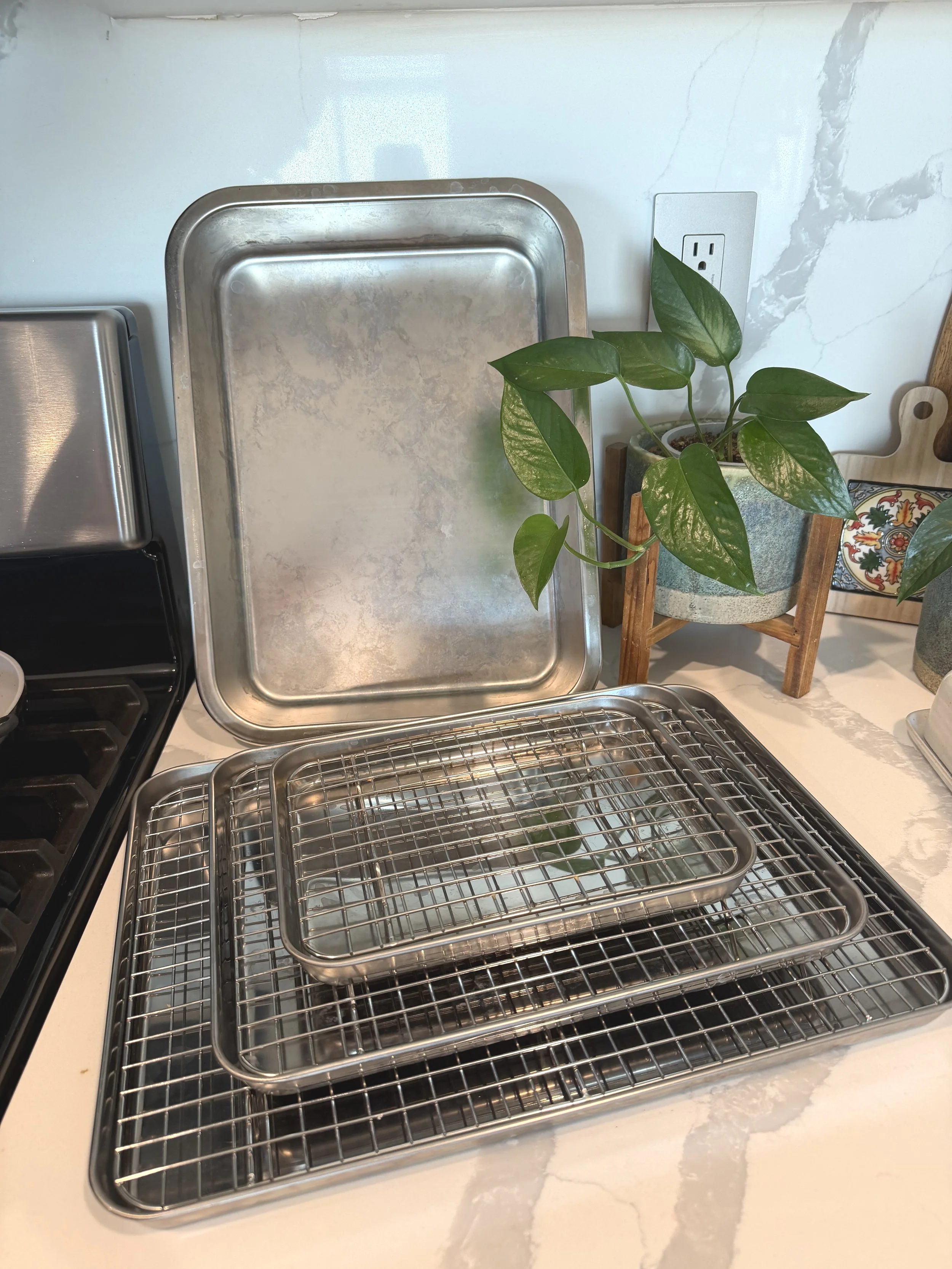
Stainless Steel Baking Pan
Stainless steel baking pans are one of my favorite kitchen swaps. They’re incredibly durable and can last for many years without warping or breaking.
Unlike some coated pans, stainless steel doesn’t have synthetic coatings that can wear down over time. It’s also easy to clean and works well for roasting vegetables, baking dishes, and everyday cooking.
It’s one of those kitchen items you buy once and use forever.
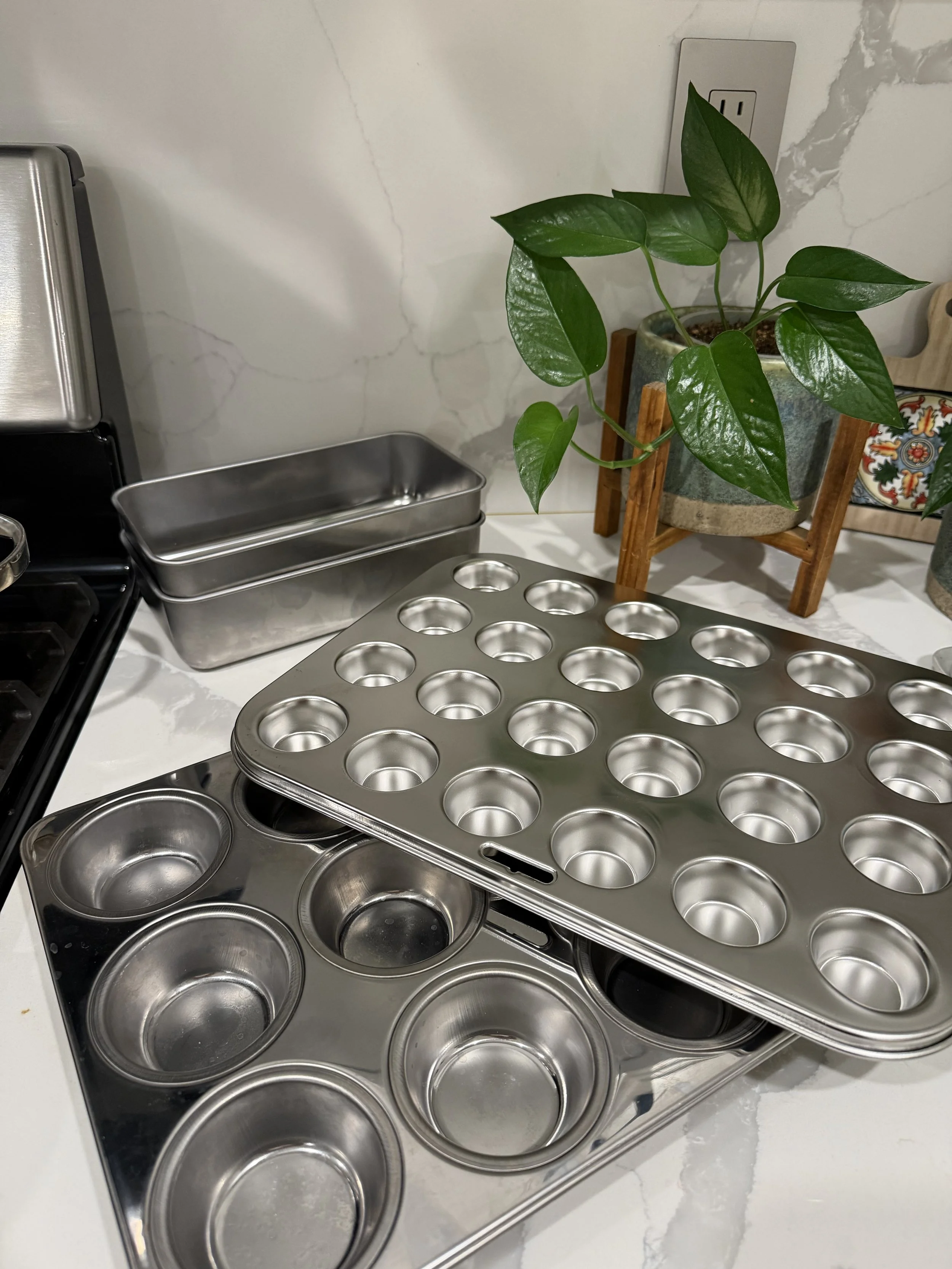
Stainless Steel Muffin and Bread Pan
We use our stainless steel muffin pan for muffins, egg bites, and even small baked snacks. And the bread pan for my sourdough discard sandwich bread!
Just like other stainless steel cookware, it’s strong, long-lasting, and doesn’t absorb odors or flavors. Stainless steel is widely used in kitchens because it’s durable and resistant to corrosion.
This is one of those swaps that feels simple but makes a big difference over time.
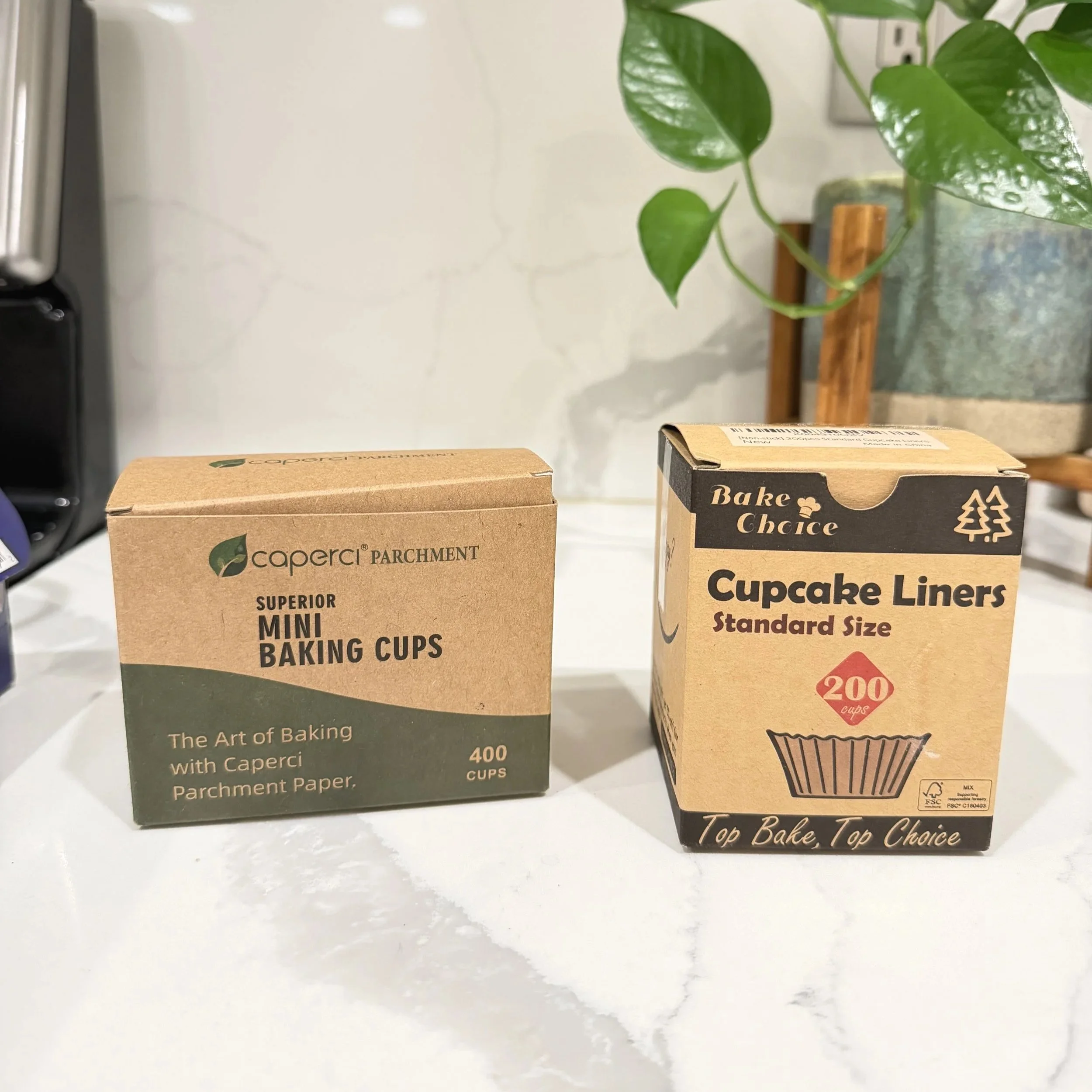
Unbleached Parchment Paper
Unbleached parchment paper liners are a simple kitchen swap we use often for baking muffins, lining pans, or preventing food from sticking in the oven.
Many parchment papers are bleached to make them bright white, a process that can involve chlorine. Unbleached parchment skips that step and keeps its natural brown color. It’s a small change, but choosing this option can help reduce unnecessary chemical processing in everyday baking supplies.
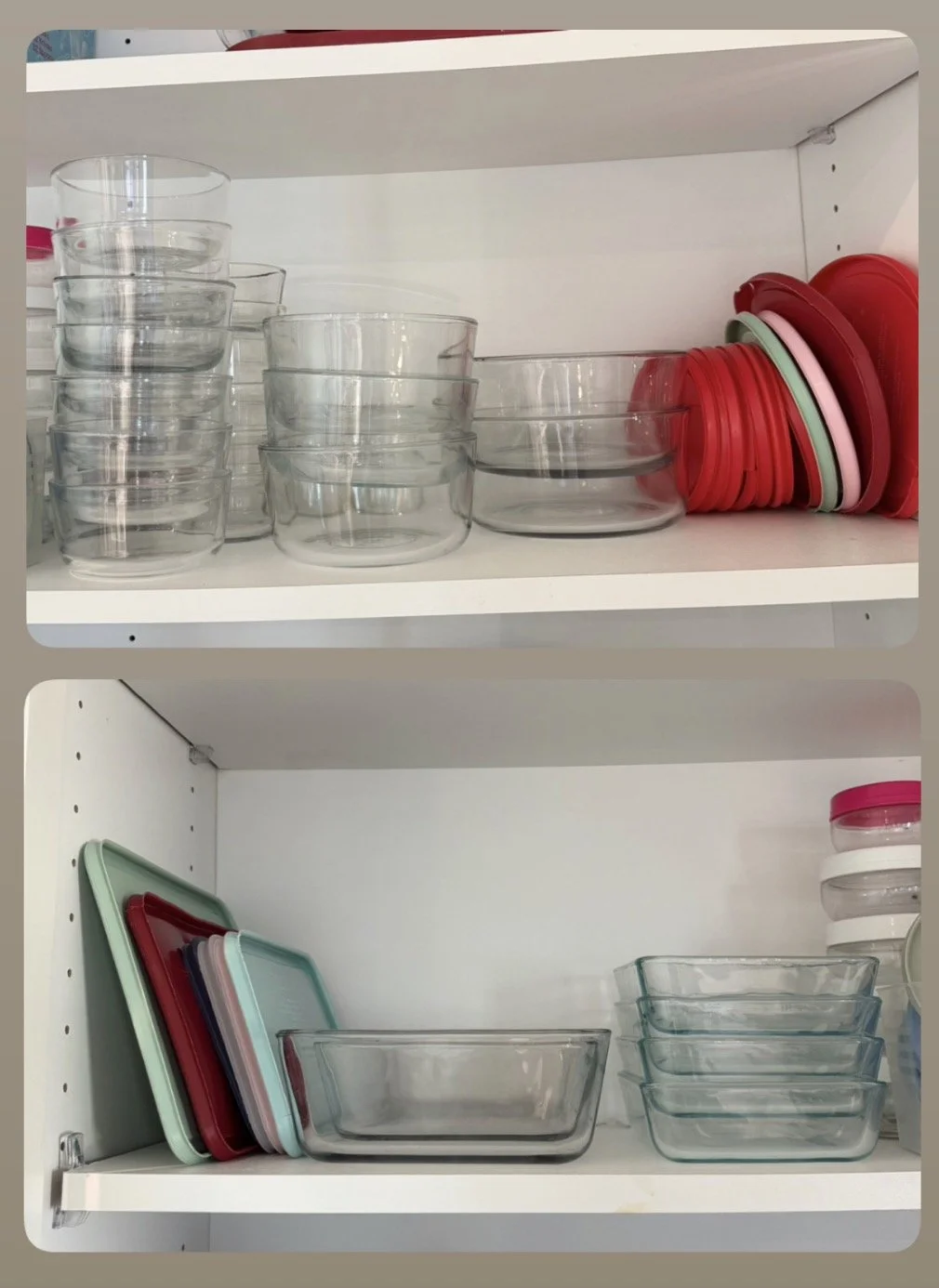
Glass Containers for Food Storage
Switching from plastic containers to glass food containers was one of the easiest swaps we made.
Glass is non-reactive, meaning it doesn’t interact with food or release chemicals into it. It also doesn’t absorb odors the way plastic can.
We use glass containers for storing leftovers, meal prep, and keeping fresh foods in the fridge. They’re also great because many can go from the refrigerator to the oven safely. I’ve tried some brands but Pyrex is still my favorite.
Pyrex 7200 2 Cup Glass Bowls - great for storing small leftovers for kids
Pyrex Mixed Sizes 9 pack - good if you wanna try different sizes
2.7oz Glass Small - good for baby food
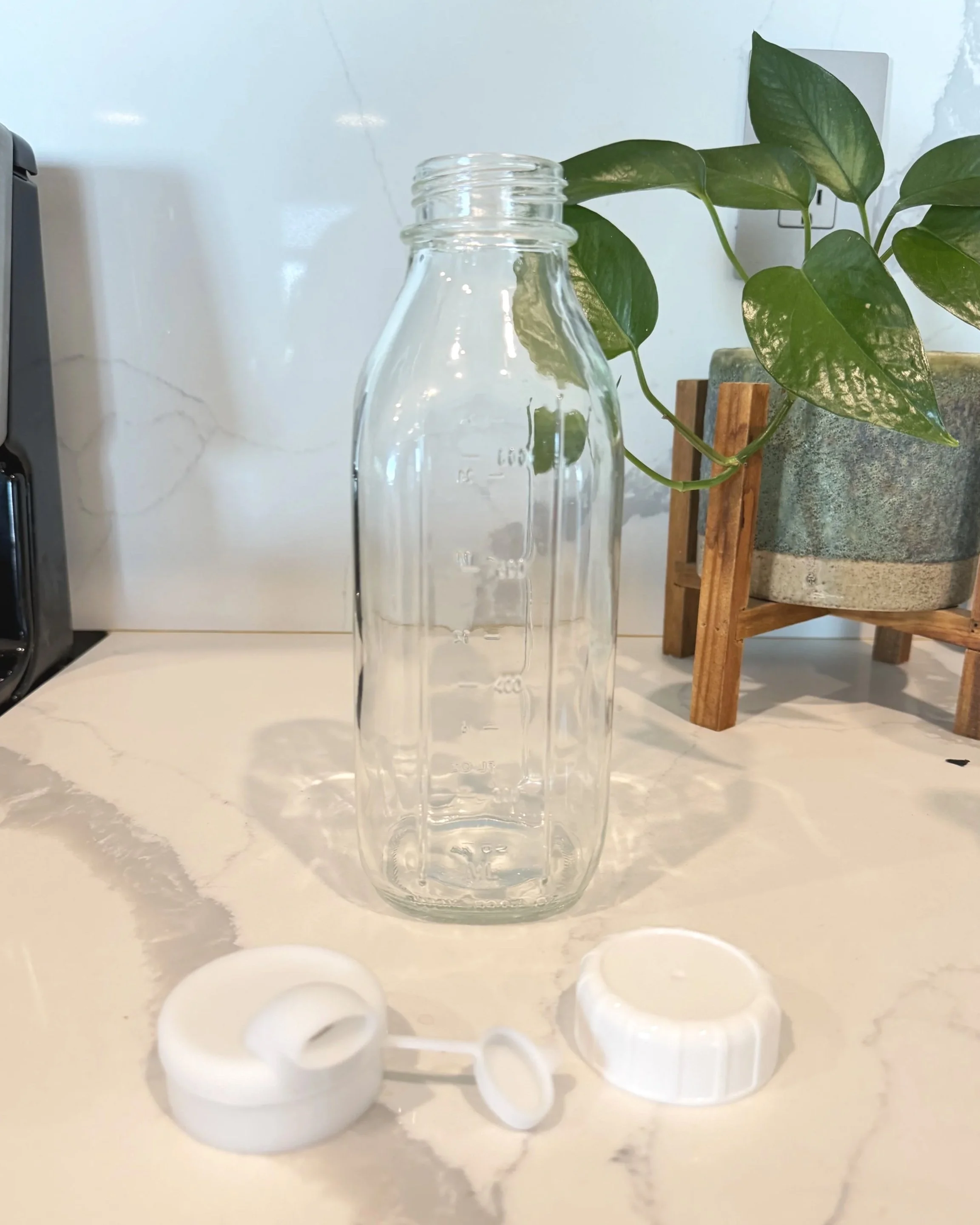
Glass Jars for Homemade Drinks
Glass jars are something I use daily at home for things like:
homemade juices
smoothies
iced coffee
homemade electrolyte drinks
Glass is often preferred for food and drink storage because it’s chemically stable and doesn’t leach substances into beverages.
Plus, they’re reusable and easy to clean!
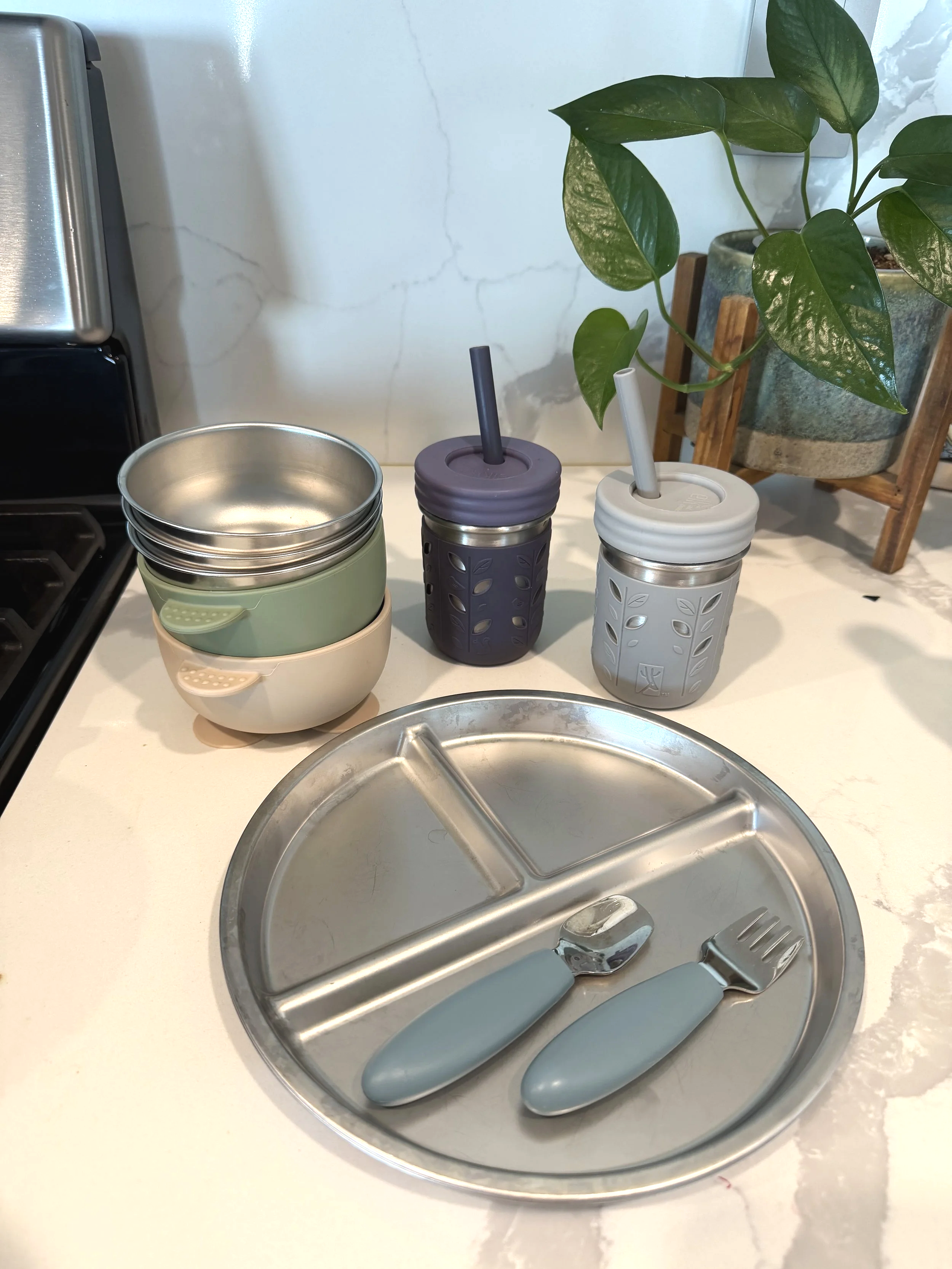
Stainless Steel Plates and Cups for Kids
Kids’ plates and cups made from stainless steel have been such a great swap for us.
They’re almost impossible to break, super easy to clean, and can last for years. Stainless steel products also avoid chemicals like BPA or phthalates that can sometimes be found in plastics.
For families with young kids, this is honestly one of the easiest and most practical swaps.
These options have a silicone sleeve for easy gripping, but the important thing is that those parts don’t touch the food/drink, and the gripping works really well for little ones!
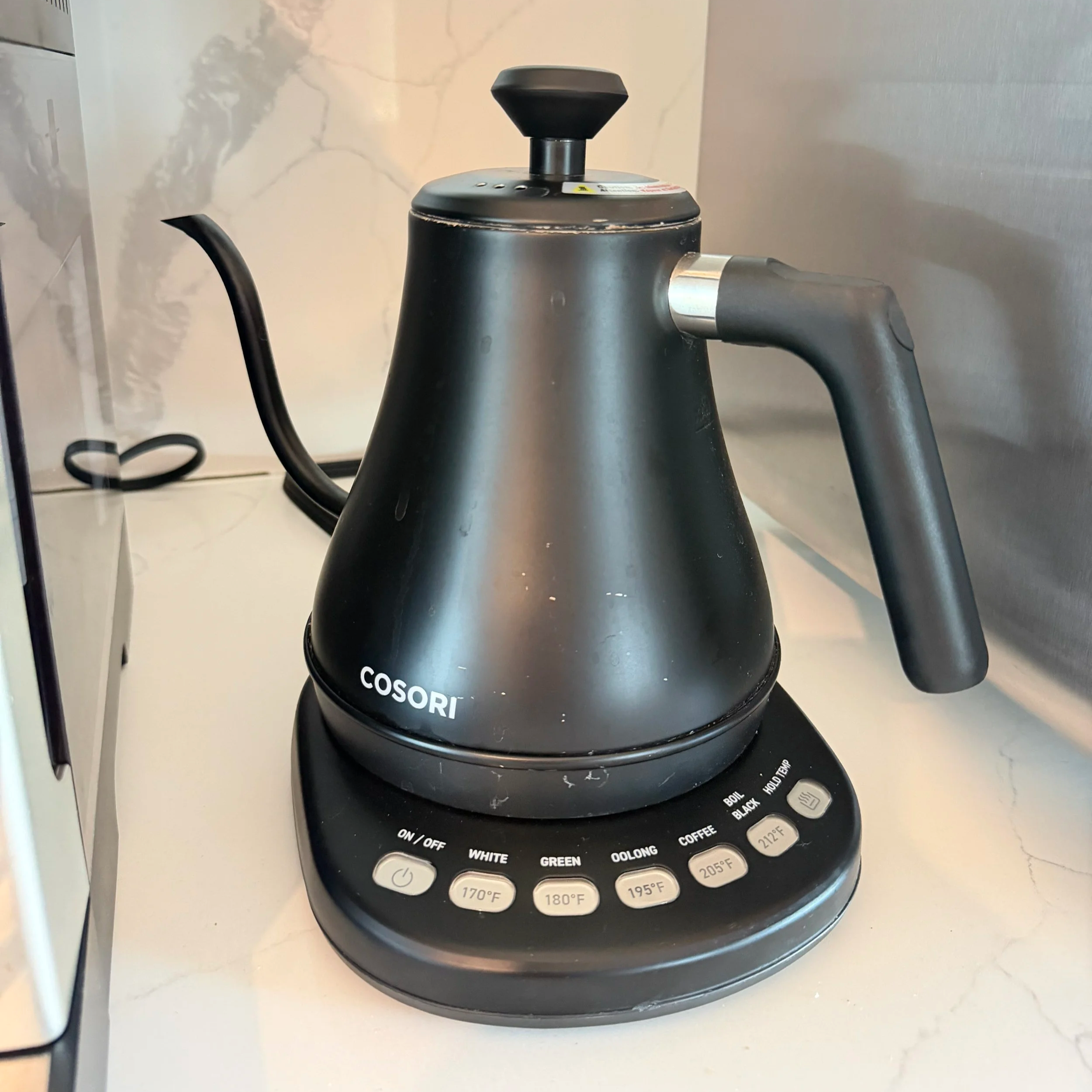
Stainless Steel Electric Kettle
We use a 100% stainless steel electric kettle, meaning the inside that touches the water is stainless steel instead of plastic.
This is something many people prefer because water can sit at very high temperatures in kettles, and stainless steel is durable and stable for heating liquids.
We use ours daily for coffee, tea, and for quickly boiling water when cooking.
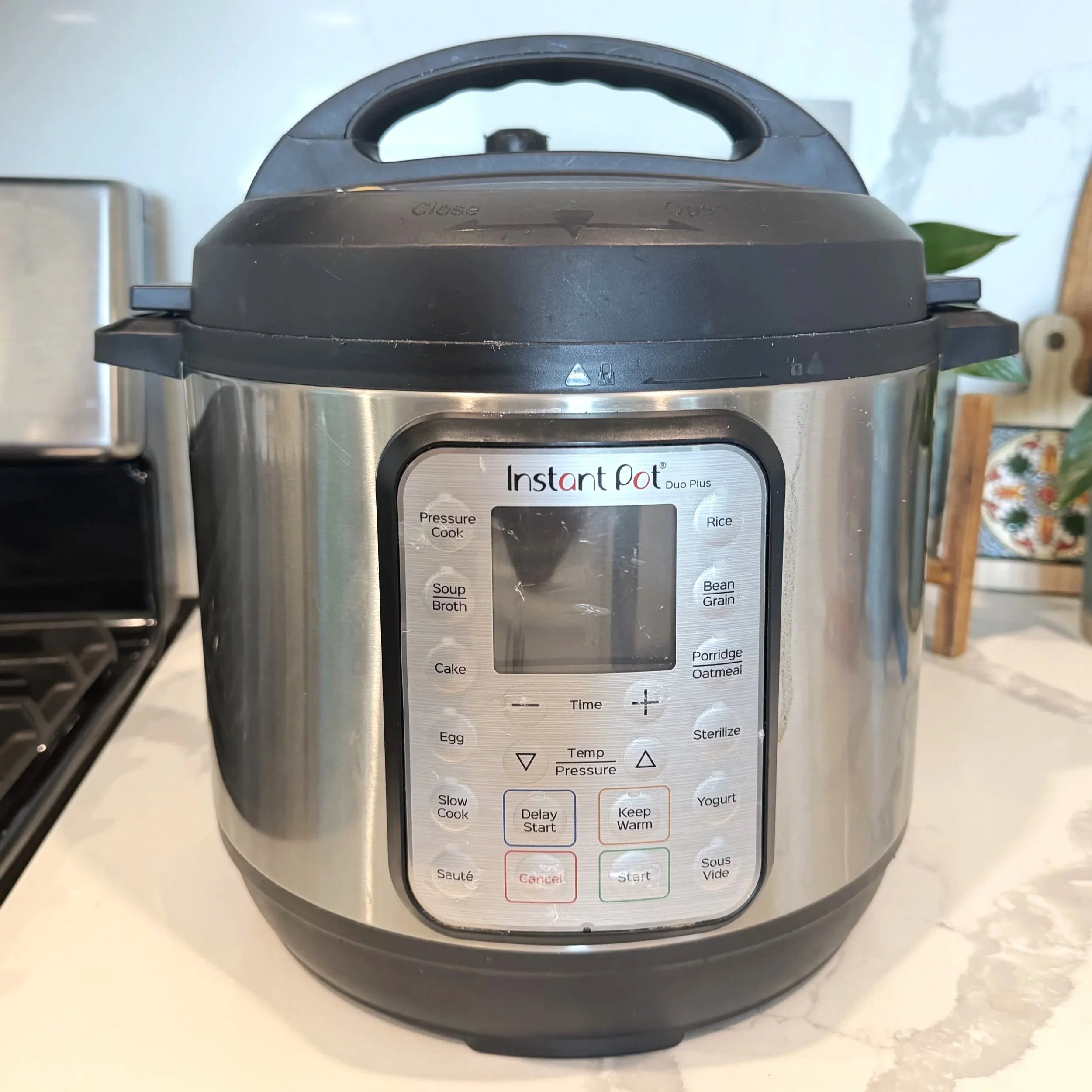
Instant Pot
Our Instant Pot is one of the most used appliances in our kitchen.
It’s great for soups, beans, rice, broths, and many one-pot meals. The inner pot is stainless steel, which makes it durable and easy to clean.
It’s one of those appliances that makes home cooking much easier, especially on busy days.
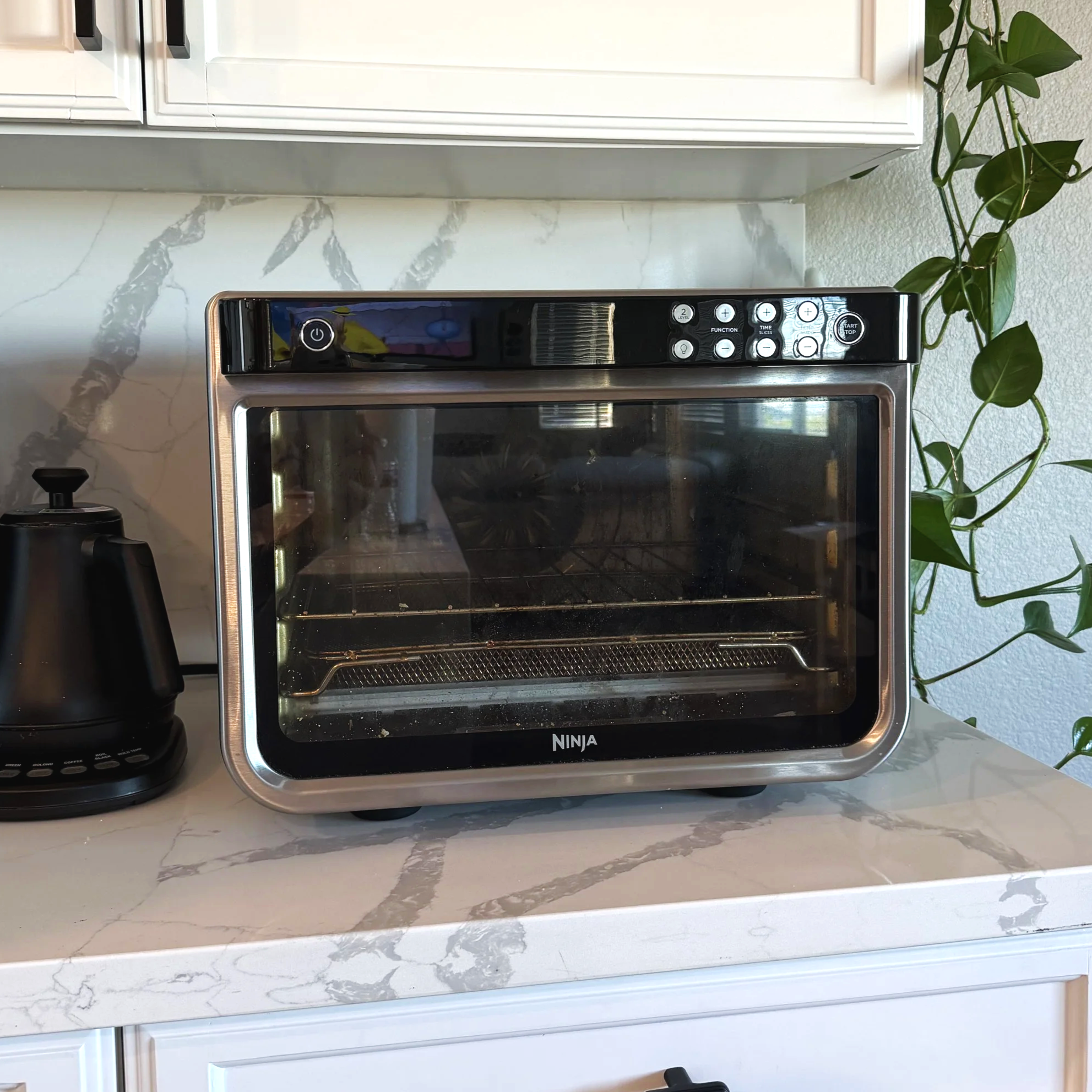
Countertop Oven
Instead of microwaving food in plastic containers, we usually reheat leftovers in the stove or in the oven.
Using glass or stainless steel containers in the oven is a simple and healthy way to warm food evenly.
It’s a small habit that helps reduce plastic exposure over time, plus you don’t loose all the nutrients of the food by heating them with the microwave.
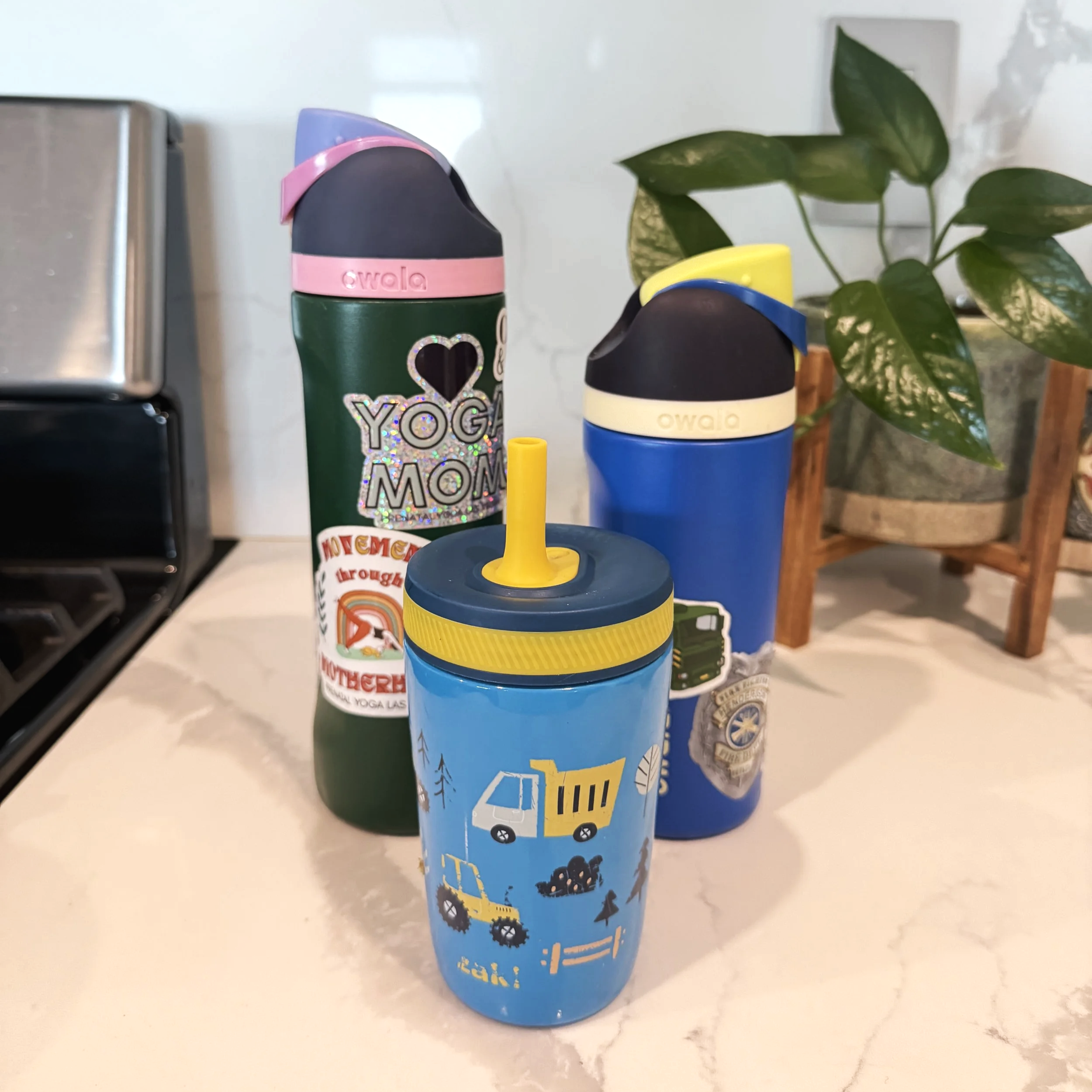
Stainless Steel Water Bottles
Many people prefer stainless steel bottles because they are durable, reusable, and don’t release chemicals when exposed to heat or sunlight.
Besides, they’ll keep your water cold in hot days and they’re great for reducing single-use plastic bottles.
I love this sippy cup for my toddler because it’s also stainless steel and mess-free!
Owala - Use my link to support me & my work <3
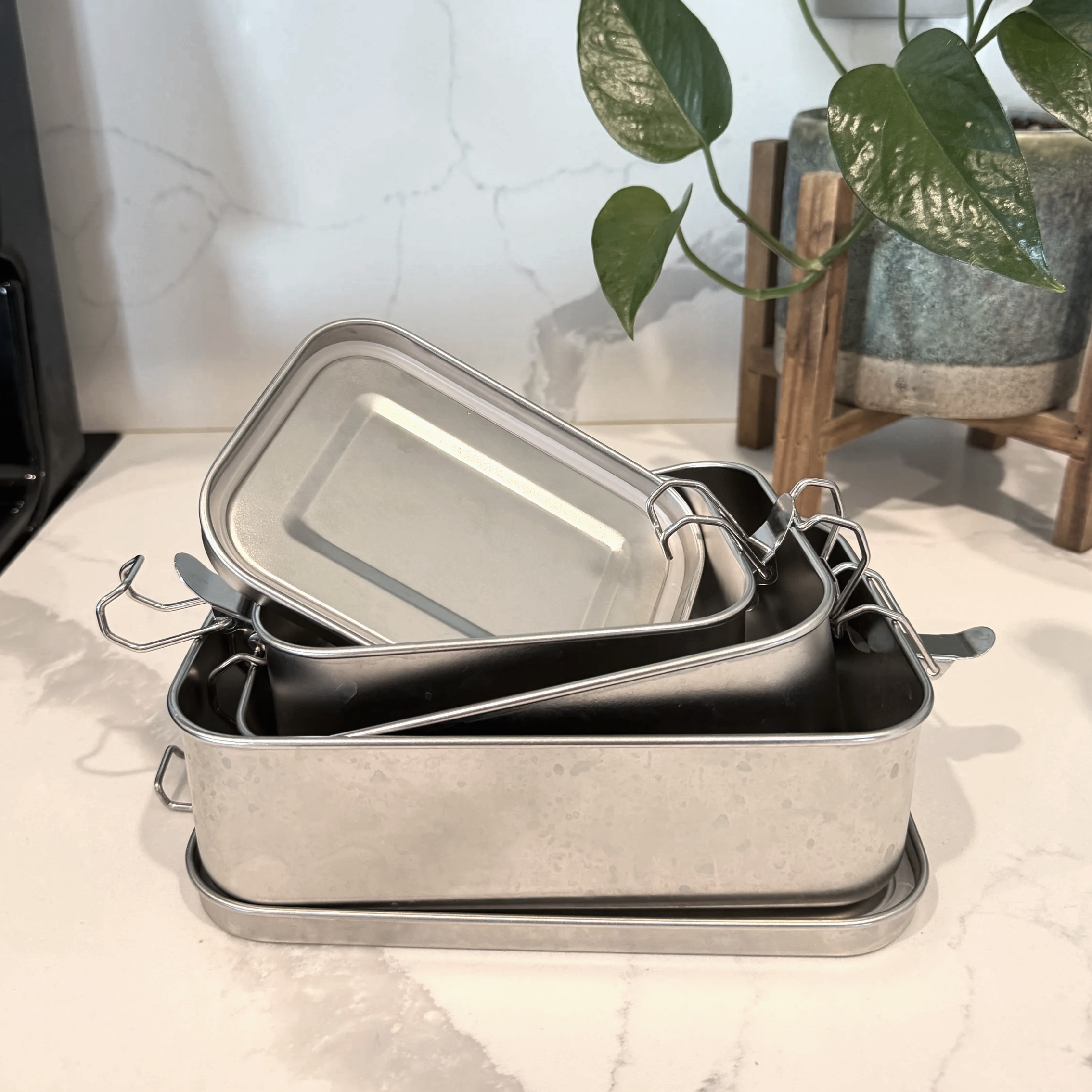
Stainless Steel Snack Box
Stainless steel snack boxes have been a great swap for us, especially for my kids’ snacks on the go.
They’re durable, lightweight, and easy to clean. Unlike plastic containers, stainless steel doesn’t absorb odors or stains, and it holds up really well over time.
I use them for things like fruits, cheese, muffins, and other snacks when we’re heading out or packing food for the day.
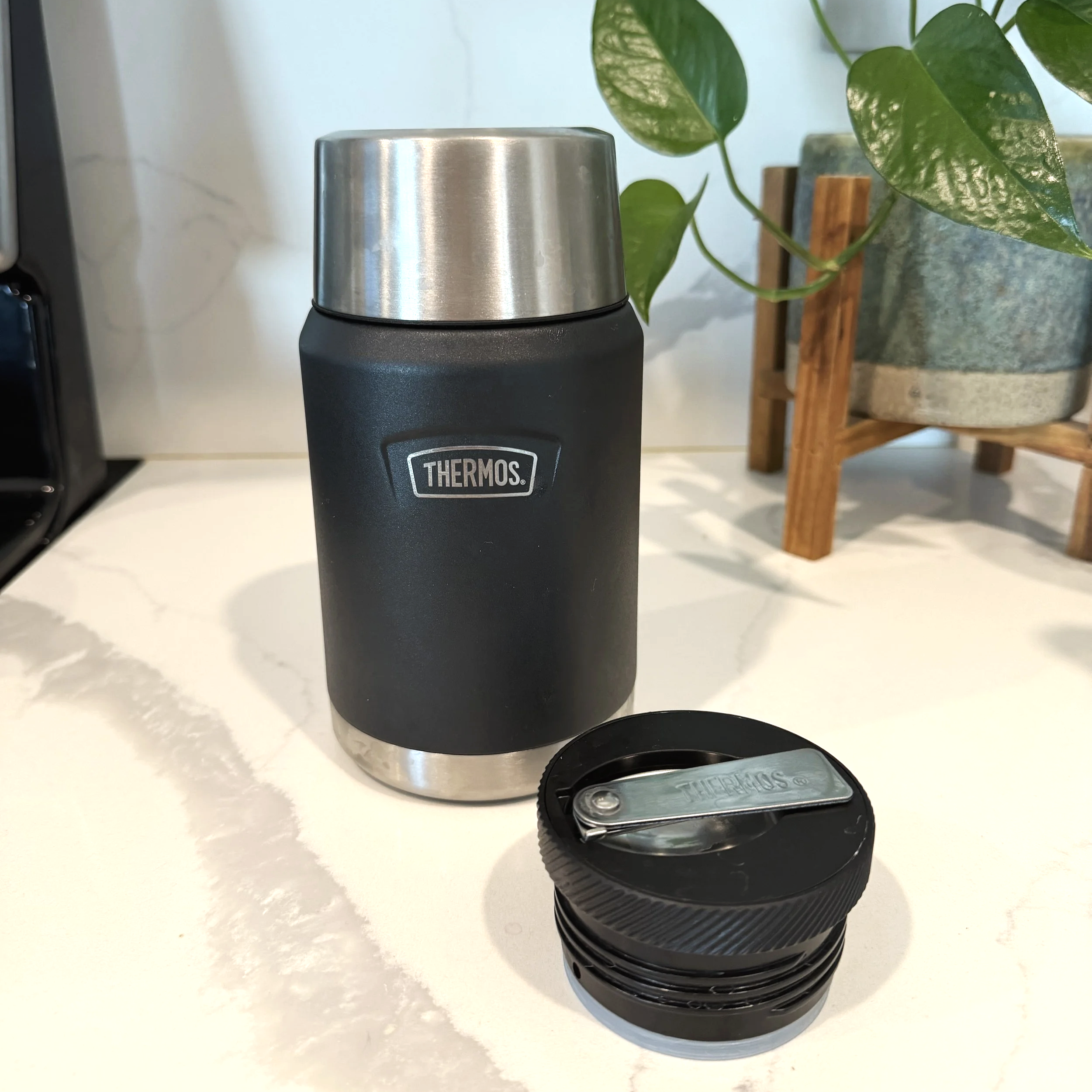
Stainless Steel Thermos
It’s perfect for keeping soups, broths, oatmeal, or warm meals hot for several hours. I use it a lot since we’re always outdoors and I don’t give my son many snacks, so by lunch time he’s ready for some real food as I call -lol-
Just like other stainless steel items, it’s durable, reusable, and avoids the need for plastic food containers that can cause you harm when carrying warm foods.
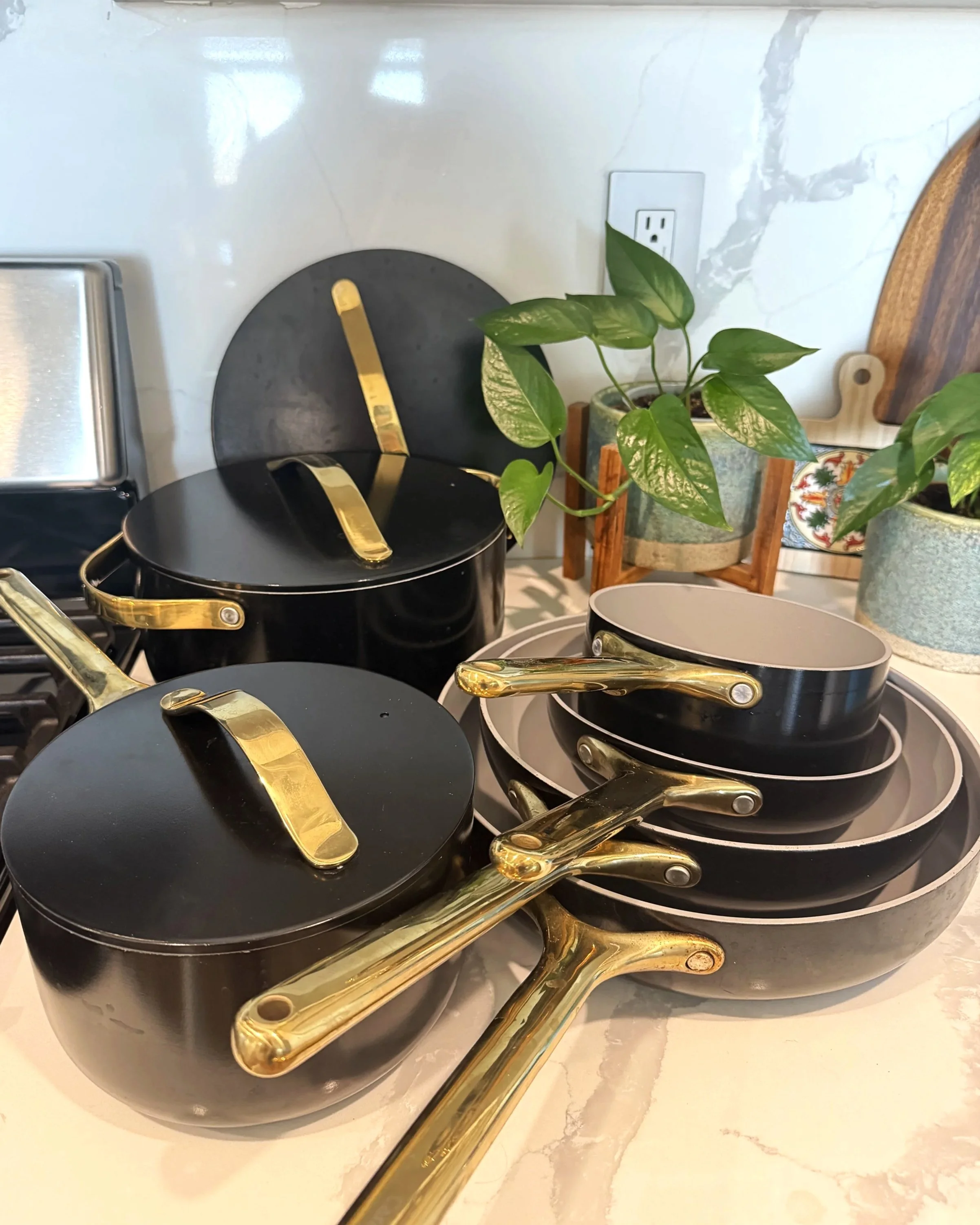
Non-Toxic Ceramic Pans
Ceramic cookware is another option many people choose when looking for alternatives to traditional non-stick pans.
Many ceramic-coated pans are made without certain chemicals sometimes found in older non-stick coatings. They’re also easy to cook with and clean. We like using ceramic pans for things like eggs, pancakes, and quick meals when we want a naturally non-stick surface.
Caraway Deluxe Set - of course you can find more affordable options, I'm just sharing this since it’s the one I have and love.
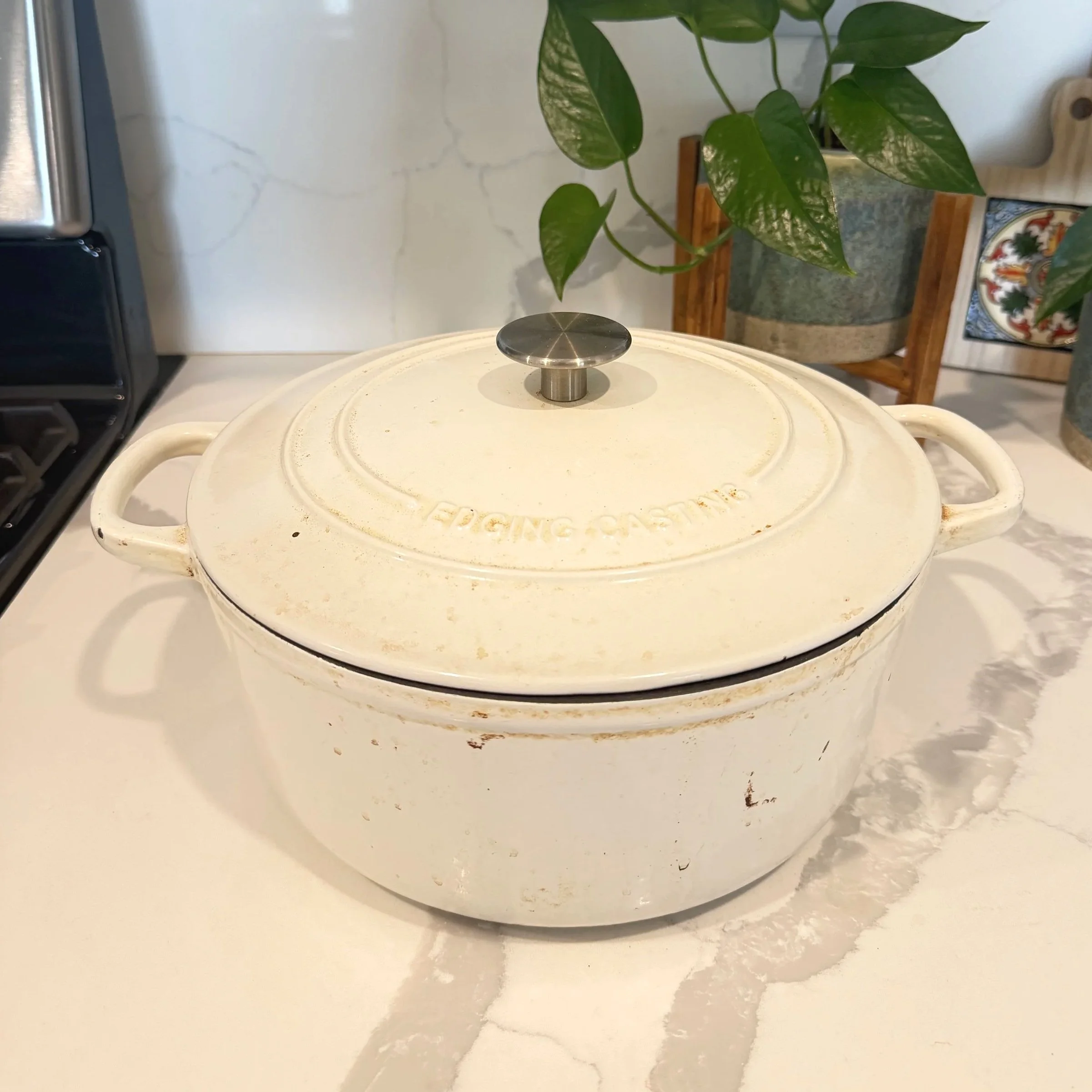
Cast Iron Pan
Cast iron pans are one of the most classic kitchen tools for a reason: they last forever.
With proper care, a cast iron pan can last decades and even be passed down through generations. It holds heat extremely well and works beautifully for searing, roasting, and cooking many types of meals.
Once seasoned, it becomes naturally non-stick and requires very little maintenance.
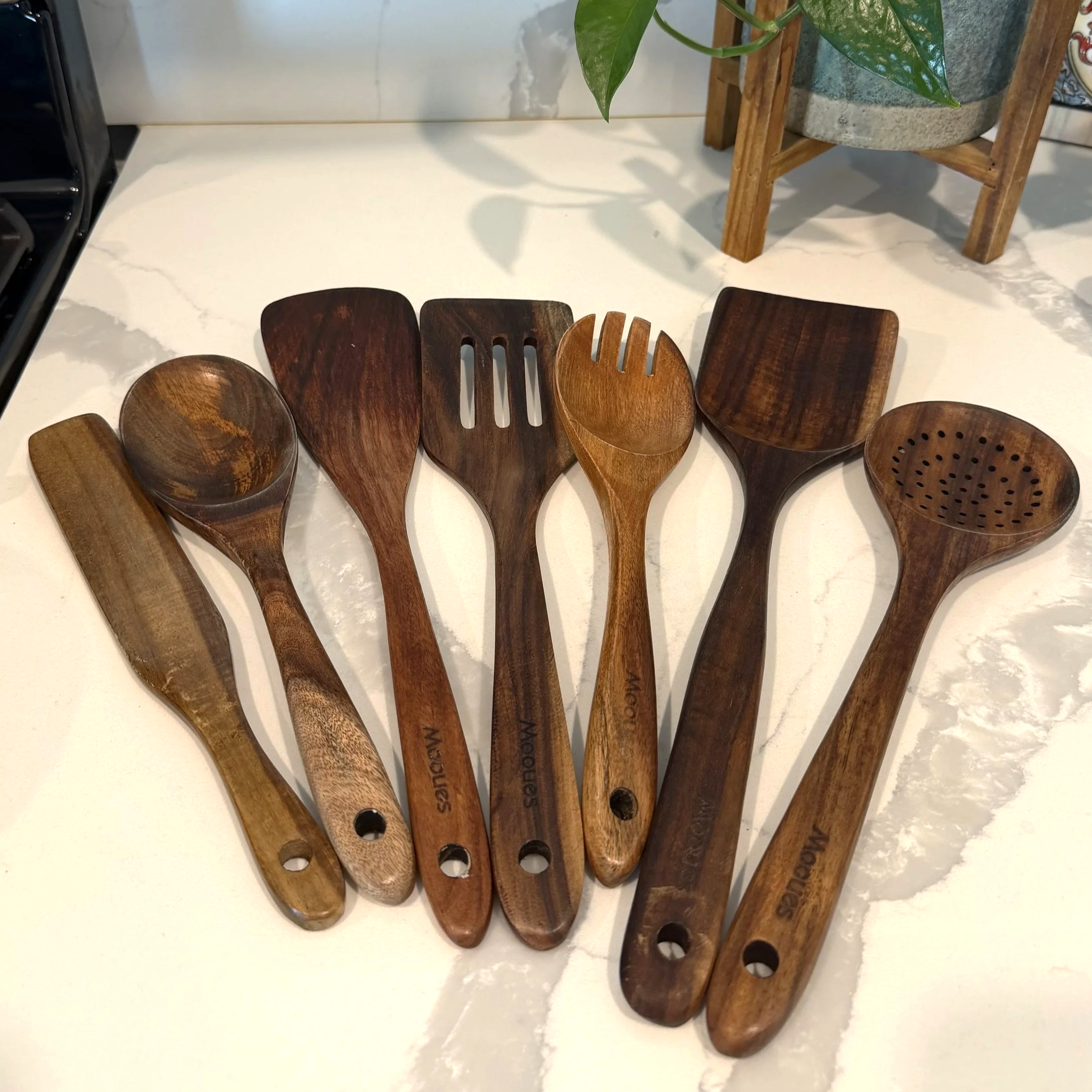
Wooden Spoons
Wooden spoons are one of the simplest kitchen swaps. They’re durable, gentle on cookware, and naturally free of plastics.
When choosing wooden utensils, it’s best to look for unfinished wood or wood treated with food-safe oils like mineral oil or beeswax. Some decorative wooden utensils can have varnish, lacquer, or paint on them, which may not be ideal for cooking with heat and repeated washing.
I still have some plastic spoons at home since I can’t use stainless steel on the pans we have to avoid scratching them, so as I always say: choose your battles lol I avoid using them, but for example the ladle I use is still made of plastic.
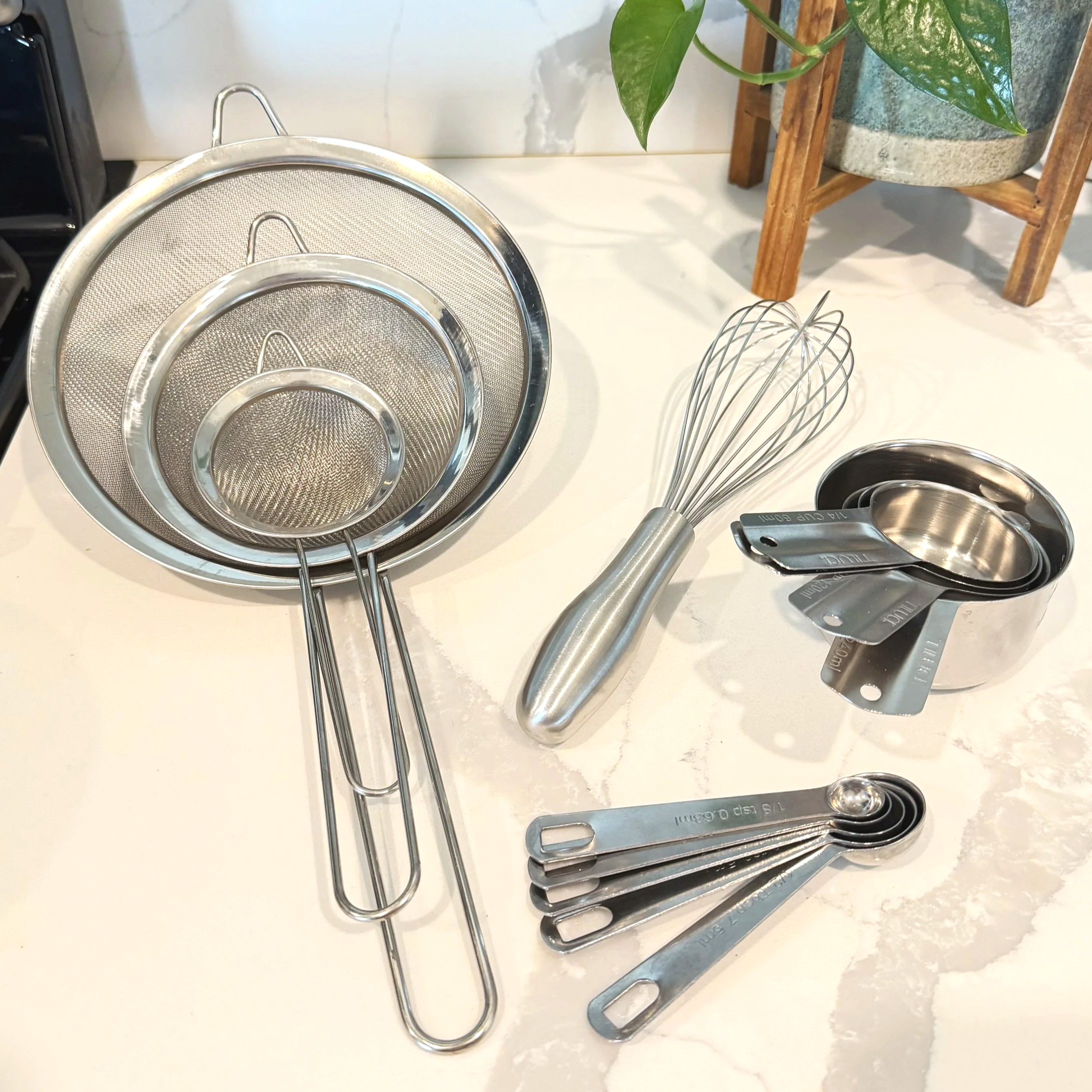
Stainless Steel Cooking Utensils
Many of our everyday kitchen tools are stainless steel, including things like:
As I said before, stainless steel utensils are strong, long-lasting, and easy to clean. They don’t warp easily and can last for many years with regular use.
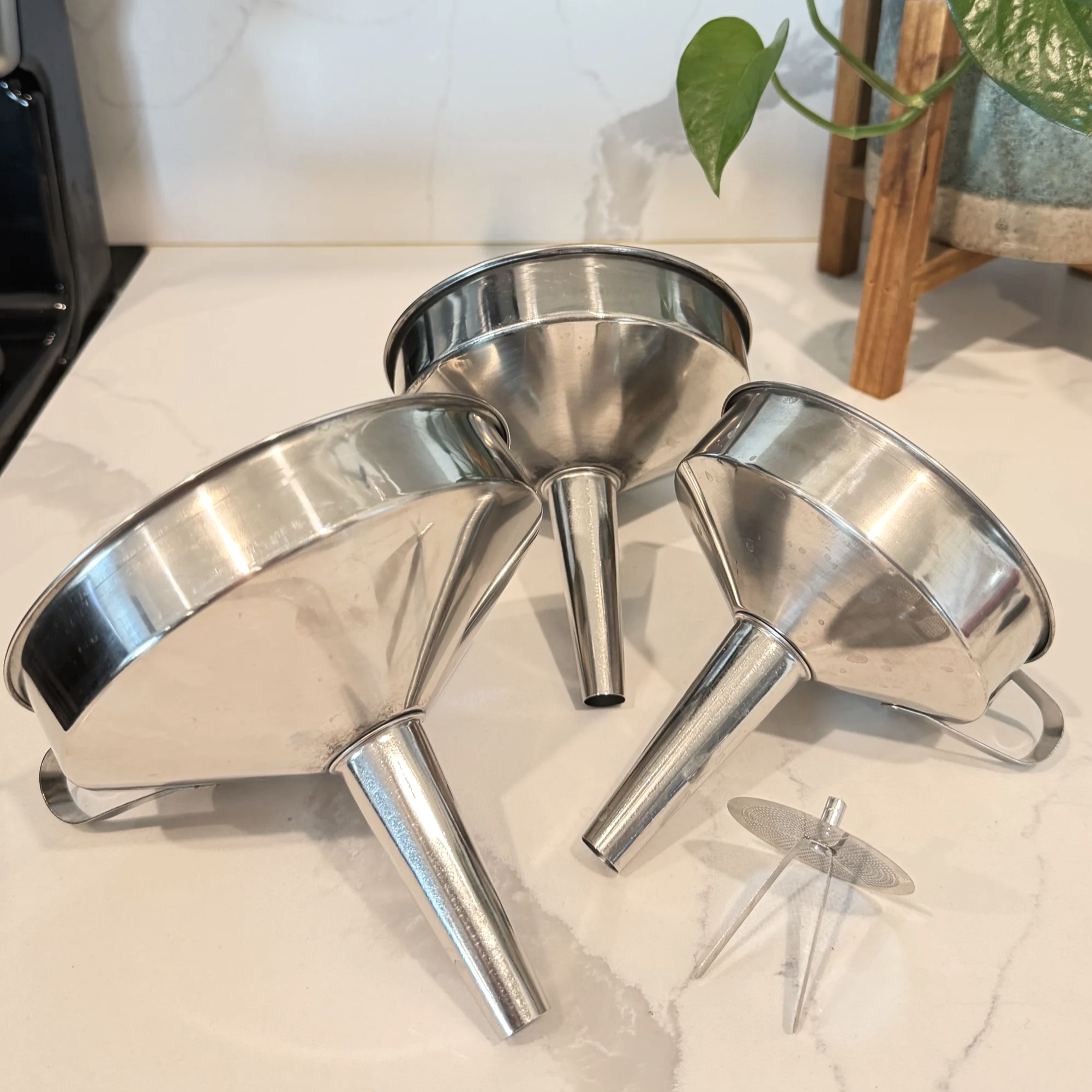
Stainless Steel Funnel
A stainless steel funnel is such a small but useful kitchen tool.
We use it when transferring liquids into jars or bottles, especially when making homemade drinks, broths, or sauces.
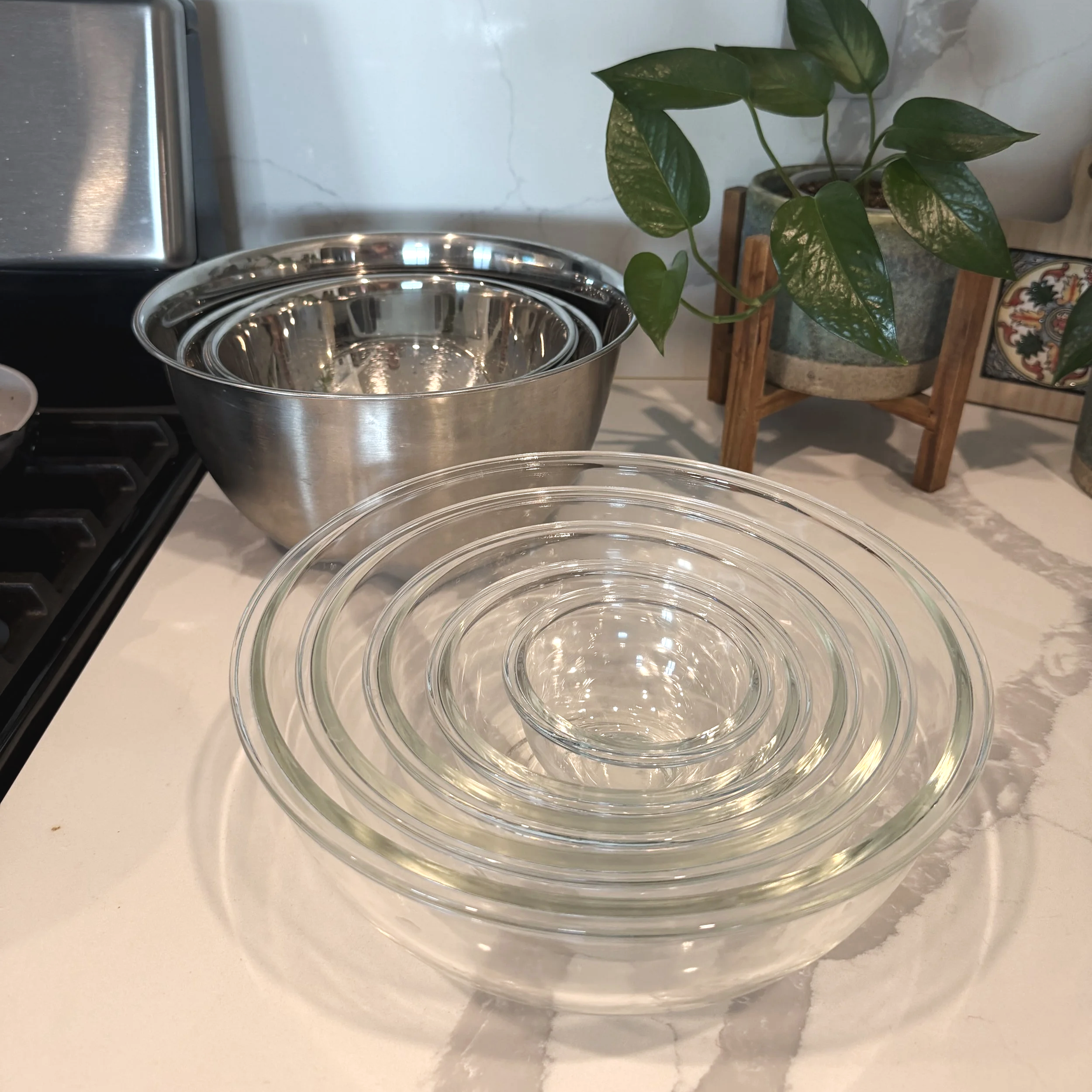
Glass and Stainless Steel Bowls
We use a mix of glass and stainless steel bowls in our kitchen for cooking and food prep.
Glass bowls are great for mixing ingredients, storing food, and sometimes even baking. Stainless steel bowls are lightweight, durable, and perfect for everyday meal prep. Both options are long-lasting and work well for many different kitchen tasks.
These glass bowls also come with lids to make it even easier to storage anything you made in them.
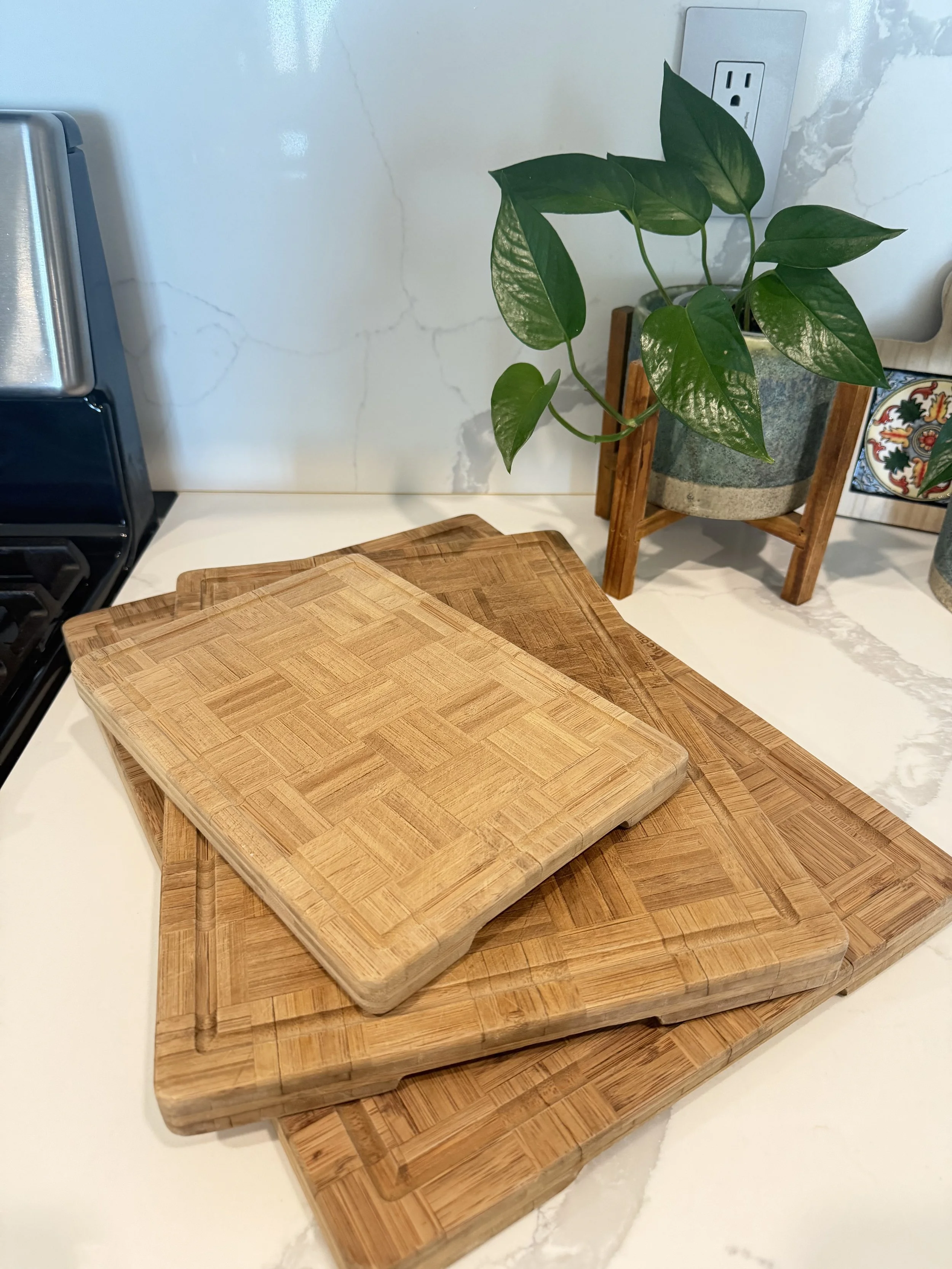
Cutting Boards
Last but not least! Cutting boards are another kitchen item worth paying attention to. Many plastic cutting boards can develop deep knife marks over time, and those grooves can release tiny plastic particles into food and make the board harder to clean properly.
Because of that, many people choose wood or glass cutting boards as alternatives. Wooden boards are durable, naturally antimicrobial, and gentle on knives, which makes them a popular option for everyday food prep. Glass cutting boards are non-porous and very easy to sanitize, though they can be a bit harder on knives.
Like with other kitchen supplies, choosing natural and durable materials can be a simple way to reduce plastic in the kitchen and create a cleaner space for preparing food.
If you choose a wooden cutting board, look for solid hardwoods like maple, walnut, cherry, acacia or beech, which are dense and durable for food prep. Avoid boards with paint, varnish, or unknown finishes, and choose ones treated with food-safe oils like mineral oil or beeswax. These materials are widely used because they’re long-lasting and work well for everyday cooking.
🌿 A Gentle Reminder
Just like I mentioned in the first post of this series: creating a lower-tox home doesn’t need to happen overnight.
You don’t need to throw away everything you currently own and replace it all at once. That would be overwhelming and also wasteful.
Instead, the idea is simple:
Switch things one at a time.
When a plastic container breaks, replace it with glass.
When you need new cookware, consider stainless steel.
When a bottle wears out, choose a reusable one.
Small swaps add up over time.
Every change you make is a step toward creating a healthier home for your family, and that’s something worth celebrating.
One swap at a time 🤍
Thank you for being here!
I hope you found something here that makes starting your clean living journey feel a little simpler and less overwhelming!
Creating a lower-tox home is definitely a learning process, and I’m right there with you - figuring things out, trying new options, and doing the best we can for our families. You’re doing an amazing job, and every small change you make truly matters.
If this post helped you, feel free to share it with another mama who might be wanting to make gentler swaps at home too ✨
Follow along on social media for more motherhood, simple recipes, low-tox living, and real-life moments from our family.
I’d love to stay connected with you there 🤍
Together, we’re learning, growing, and making more intentional choices…
Because Together, We Are UNO 🤍
